Telepsychiatry · 8 min read
Online Psychiatrist vs In-Person Psychiatry: Which Is Better and How to Choose
Telepsychiatry and office-based psychiatry deliver the same core care: a full evaluation, a discussion of symptoms, and a treatment plan built around your life. What differs is access, convenience, and where you feel comfortable talking. This comparison walks through both formats, who benefits most from each, and how to pick the one you'll actually keep attending.
Medically reviewed by Shariq Refai, MD, MBA, FAPA, board certified psychiatrist · Last reviewed September 23, 2026 · Updated October 23, 2026 · Editorial policy
From my practice · Shariq Refai, MD, MBA, FAPA
How I decide which fits a given patient
I practice online, and I still tell some people they'd be better served in person, because honesty matters more than filling my schedule. Video works beautifully for the steady work of diagnosis, medication management, and follow up. Where I hesitate is acute crisis, certain controlled medications, and anyone who needs a physical exam.
For most people with depression, anxiety, or the ordinary run of conditions I treat, the online setting isn't a compromise, it's often an upgrade in access and consistency. The right question isn't which is better in the abstract, but which fits your situation, and that's a judgment I make case by case.
Why more people now search for an online psychiatrist
Ten or fifteen years ago, most people assumed psychiatric care meant sitting in a waiting room and then talking in an office for forty five minutes. That assumption has changed quickly. In clinical practice I've noticed that many patients no longer begin their search with "psychiatrist near me." They start with "online psychiatrist" or "telepsychiatry appointment." The shift is about access at least as much as technology.
There simply aren't enough psychiatrists in many parts of the country. The Association of American Medical Colleges has projected a growing shortage of mental health physicians, and many communities already feel that gap. Patients call several offices and hear the same answer: the next opening is months away. Add work schedules, childcare, and commuting time, and a traditional appointment can be hard to fit into the day at all.
During the COVID pandemic, telepsychiatry expanded out of necessity. What surprised many clinicians, myself included, was how well it worked. The American Psychiatric Association has reviewed the research on telepsychiatry and notes that outcomes are often comparable to in-person care for conditions such as anxiety and depression.
There's one more factor patients mention more often than people expect. Privacy. Stigma around mental health has improved, but it hasn't disappeared, and some people feel uncomfortable walking into a clinic in their own community. Speaking with a psychiatrist from home removes that barrier. Telepsychiatry didn't replace traditional care. It expanded the ways people can receive it.
What actually happens in a telepsychiatry visit
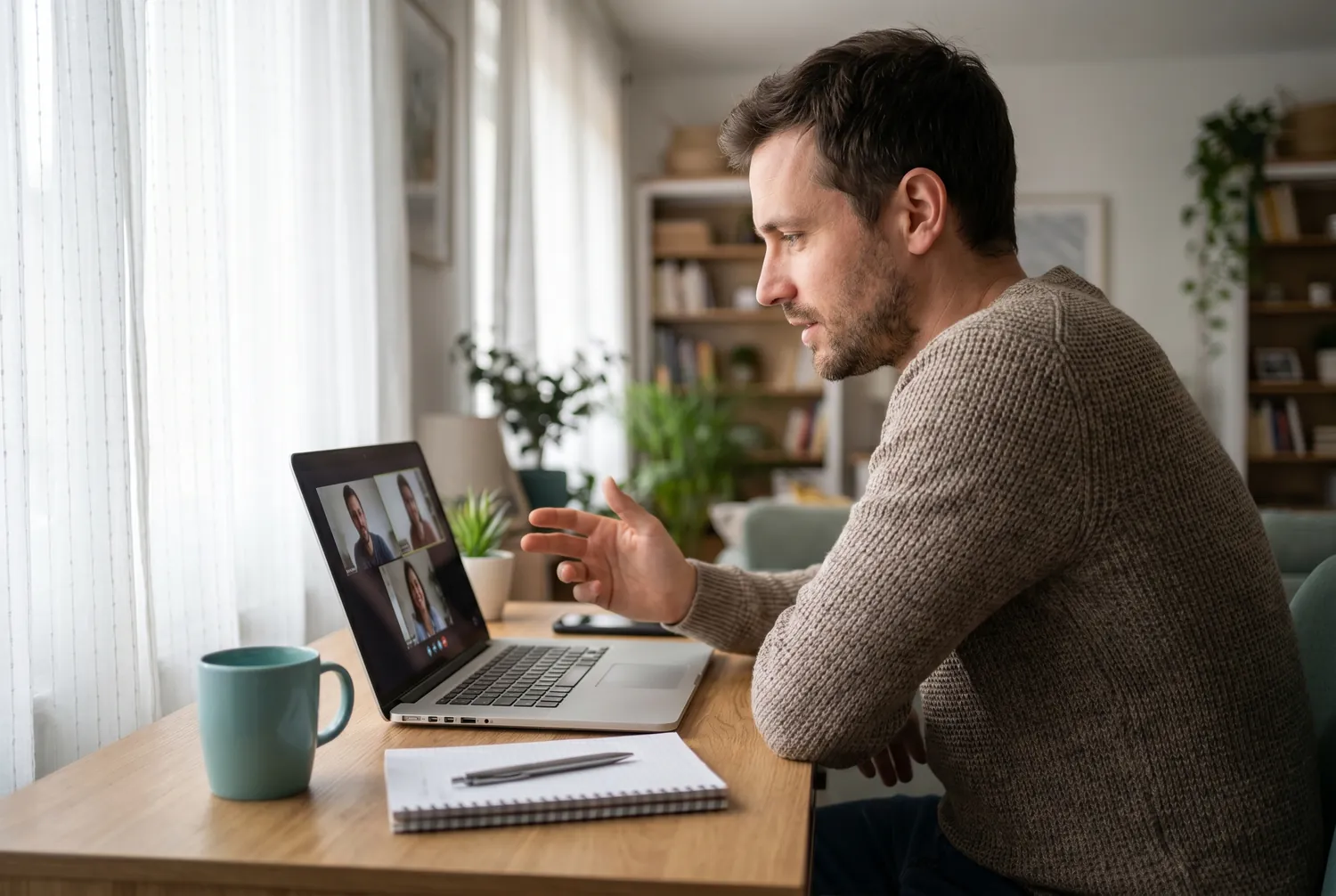
A lot of people imagine telepsychiatry as something completely different from traditional psychiatric care. In reality, the structure is almost identical; only the setting changes. You schedule the appointment, complete intake forms, and join through a private video platform built for medical visits. Our how it works page lays out each step.
From there the conversation unfolds like any psychiatric evaluation. The psychiatrist asks what has been happening recently: changes in mood, anxiety, sleep, concentration, stress at work, shifts in relationships. Some people arrive with a specific concern. Others know only that something has been off. The goal of the first visit is understanding patterns. At shrinkMD, that evaluation runs 45 to 60 minutes, and follow-up visits are shorter conversations of 15 to 30 minutes focused on how the plan is working.
One thing that surprises many people is how normal it feels once the conversation begins. After the first few minutes, most patients stop noticing the screen. I hear the same reflection again and again after a first video visit: "I thought this would feel strange, but it actually felt like a regular appointment."
What an office visit still does well
For many people, the traditional office visit still feels like the most natural way to receive care. There's something familiar about walking into a medical office and having a conversation face to face. The visit follows a structured flow: check in at the front desk, a few minutes in the waiting area, then a private room that's quiet and predictable, designed for focused conversation.
Some people find that structure genuinely helpful. Stepping into a clinical setting creates a mental boundary between everyday life and the time spent talking about difficult experiences. That separation can help a person slow down and reflect more deeply than they'd at their kitchen table.
Direct human presence matters too. Body language can feel easier to read, pauses feel more natural, and the interaction feels more personal for certain patients. In my practice I see that preference most among people who value routine or who simply feel more at ease discussing sensitive topics in a private office rather than at home. None of this makes one setting better than the other. It reflects how differently people experience conversations.
Is online psychiatry as effective as in-person care?
This is usually the first question people ask once they learn telepsychiatry exists, and in many cases the answer is yes. The American Psychiatric Association has reviewed multiple studies and notes that psychiatric care delivered through secure video provides the same evaluations, treatment discussions, and follow-up care as office appointments. Psychiatry doesn't depend on physical exams the way many other specialties do.
That matters. Psychiatric work relies on conversation, careful observation, and recognizing patterns in a person's thoughts, emotions, and daily functioning. All of that translates through video when the connection is stable and the room is private. The reviews the APA cites report similar symptom improvement for depression and anxiety in both formats, and attendance is sometimes higher for virtual visits because travel drops out of the equation.
Effectiveness still depends on fit. The quality of the relationship between patient and psychiatrist matters more than the location of the conversation. I've watched meaningful progress happen in both settings. The real variable is rarely the technology. It's whether someone feels comfortable enough to speak honestly and then returns for follow-up care. That's where improvement tends to begin.
The practical differences, side by side
Convenience is the most obvious difference. An online visit requires no travel, no parking, and no waiting room, so appointments fit between work or family responsibilities. An office visit depends on clinic hours plus the commute, which can turn a 20 minute follow-up into a half-day errand.
Access is the difference people underestimate. A virtual practice can see patients across an entire state, which shortens waits in communities with few psychiatrists. shrinkMD, for example, is pre-launch and taking waitlist sign-ups for adults 18 and older; the full list is on our locations page. In-person care is limited to clinicians within driving distance, and some local waitlists run months long.
Privacy and technology round out the comparison. Online visits happen wherever you have a quiet private space, an internet connection, and a phone, tablet, or computer. Office visits require no technology at all, and some patients prefer keeping clinical conversations physically separate from home life. Most people simply choose whichever option fits their routine and comfort level.
Who tends to benefit most from an online psychiatrist
After working with telepsychiatry for a while, certain groups stand out. Busy professionals are the first. Many adults seeking psychiatric care are functioning at a high level: working full time, managing teams, running businesses. Taking half a day off to drive across town feels unrealistic. A video visit lets them step away briefly, have a focused conversation, and return to their day.
Parents face the same math with school schedules and childcare layered on top. Telepsychiatry lets a parent connect while a child is at school rather than arranging transportation, childcare, and travel all at once. People in rural and underserved areas gain even more; in some communities the nearest psychiatrist is hours away, and a video visit removes that distance entirely while still delivering a full evaluation.
Two more groups come up regularly: people with mobility or health challenges, for whom chronic pain or disability makes frequent trips exhausting, and people who value privacy and would rather not walk into a psychiatric clinic in their own town. The pattern underneath all of these is the same. When care becomes easier to access, people show up. And in mental health care, showing up consistently is often where meaningful change begins.
When in-person care makes more sense
Telepsychiatry works well for many people, but not for every situation. If someone is experiencing severe symptoms, intense agitation, rapidly changing mood states, or difficulty staying safe, an in-person setting allows closer observation and faster coordination with other medical services. And a crisis isn't an appointment of either kind: if you're in danger or thinking about harming yourself, call or text 988, call 911, or go to the nearest emergency room.
There are also times when a brief physical exam helps. A psychiatrist may want to check neurological signs or observe movement patterns related to medication side effects, and an office makes that easier in a single visit.
Finally, plain preference counts. Some people open up more easily sitting across from someone than looking at a screen. The most important factor isn't where the conversation happens. It's whether the environment lets you speak honestly and come back. For some patients that's a quiet clinic office. For others it's a private room at home. Both work when the fit is right.
Can an online psychiatrist prescribe medication?
In many cases, yes. After a proper evaluation, a psychiatrist can prescribe medication through a video visit just as in an office, and send the prescription electronically to your pharmacy. State licensing rules still apply: the clinician must be licensed in the state where you're physically located during the visit. Federal regulations add requirements for certain medication classes.
At shrinkMD, the policy is simple and worth knowing before you book. We prescribe non-controlled medications only. No stimulants and no benzodiazepines, in any state, for any patient. Most medications used for depression, anxiety, and related conditions are non-controlled, and when a prescription is part of your plan it goes to your pharmacy the day it's written. You can read more about our approach on the medications and medication management pages.
How to decide, and why starting matters more than the format
When patients ask me to settle the online versus in-person question, I walk them through four practical questions. How easy will it be to attend appointments consistently? Where do you feel most comfortable talking openly? Do you've reliable technology and a private space? And how quickly do you want to start? Care works best when visits happen regularly, especially early in treatment, so the honest answers usually make the decision for you.
Here's what I see happen while people deliberate: weeks or months pass, and the symptoms continue. Anxiety stays constant. Sleep stays disrupted. Mood changes quietly spread into work and relationships. Early conversations with a psychiatrist are often less about diagnosis and more about understanding patterns in mood, stress, sleep, and daily functioning, and they get easier the sooner they start.
So begin with the option that's easiest to access, and adjust later if you need to. Many patients start online and move to an office, or the reverse, without losing momentum. If virtual care fits your life, shrinkMD offers secure video visits for adults 18 and older (pre-launch and taking waitlist sign-ups); your first appointment explains exactly what to expect, and you can reach us through the contact page.
Key takeaways
Five things to remember
- The psychiatric evaluation, diagnosis, and treatment planning are the same online and in the office; the setting is the main practical difference.
- American Psychiatric Association reviews find video visits deliver comparable evaluations and follow-up care for common conditions such as anxiety and depression.
- Online care fits busy professionals, parents, rural patients, and anyone whose commute, mobility, or privacy concerns keep delaying a first appointment.
- Severe instability, safety concerns, or the need for a physical exam point toward in-person or emergency care; for crises, use 988 or 911.
- Choose the format you'll actually keep attending, because consistent visits drive results more than the room where the conversation happens.
Go deeper across The Shrink Network
You are here: shrinkMD, the clinical care layer of The Shrink Network.
Each site in the network has one job. No matter where you enter, we help you find the next step that makes sense.
Want to understand more first?
- Shrinkiatry: State of psychiatry: telepsychiatry
- AnxietyResearch: Telepsychiatry for anxiety care: the evidence
These sites and shrinkMD are part of The Shrink Network, founded by Shariq Refai, MD.
Keep exploring
Keep reading, or take the next step
Frequently asked questions
Good questions, clear answers
Is telepsychiatry as effective as in-person psychiatry?
For many common conditions such as anxiety and depression, yes. The American Psychiatric Association notes that video visits provide the same evaluations, treatment discussions, and follow-up care as office appointments, with comparable outcomes in the studies it has reviewed.
Is it better to see a psychiatrist online or in person?
Both are effective. The better choice depends on your comfort level, your access to local clinicians, and your ability to attend appointments consistently. The format you'll actually keep is usually the right one.
Can I switch between online and in-person care later?
Yes. Many patients start with telepsychiatry because it's easier to schedule, then move to office visits later, or combine both. Mental health care can flex around what works for you.
Can an online psychiatrist prescribe medication?
Yes, after a proper evaluation, with prescriptions sent electronically to your pharmacy. State licensing and federal rules still apply. shrinkMD prescribes non-controlled medications only, with no stimulants or benzodiazepines for any patient.
Is telepsychiatry private and secure?
Visits take place through secure medical video platforms built to meet healthcare privacy standards such as HIPAA. Confidentiality remains a core part of the relationship, exactly as it would be in an office.
What do I need for a telepsychiatry appointment?
A reliable internet connection, a phone, tablet, or computer with a camera, and a quiet private space where you can talk without interruption. If those are hard to arrange, an office visit removes the obstacle.
What conditions can be treated through telepsychiatry?
Anxiety disorders, depression, panic symptoms, stress-related conditions, and sleep difficulties are all commonly treated by video. The psychiatrist evaluates symptoms and discusses treatment options just as in a traditional office visit.
How long are shrinkMD appointments, and who can book?
Initial evaluations run 45 to 60 minutes and follow-up visits run 15 to 30 minutes. shrinkMD sees adults 18 and older located in the multiple states where our clinicians are licensed.
How this page is reviewed and how to cite it
EducationalVerify independently: ORCID · Wikidata · NPI Registry · All shrinkMD credentials
shrinkMD. (2026). Online vs In-Person Psychiatrist: How to Choose [Web page, medically reviewed by Shariq Refai, MD, MBA]. https://shrinkmd.com/online-psychiatrist-vs-in-personAbout the author
Shariq Refai, MD, MBA, FAPA
I'm a board certified psychiatrist and the founder of shrinkMD, a telepsychiatry platform built around access, continuity, and clinical rigor. My work focuses on helping people understand their mental health clearly and thoughtfully, without rushing to conclusions or shortcuts. I have clinical experience across a range of settings, including work with high-performing individuals and professional athletes, and I remain committed to care that's careful, individualized, and grounded in sound clinical judgment. shrinkMD provides psychiatric care across multiple licensed states in the US, with an emphasis on responsible telepsychiatry and long-term continuity.
Questions like these deserve a real evaluation
shrinkMD isn't seeing patients yet and hasn't set an opening date. Join the waitlist and we'll email you when booking opens in your state.
Join Our Waiting List