Telepsychiatry · 8 min read
How Telepsychiatry Works: What to Expect from an Online Psychiatrist
Telepsychiatry is real psychiatric care delivered through a secure video visit: the same evaluation, the same questions about mood, sleep, and daily functioning, the same treatment planning. This article walks through what actually happens on screen during an appointment and what runs behind the scenes, including the technology, the privacy rules, and the prescribing regulations that shape virtual care.
Medically reviewed by Shariq Refai, MD, MBA, FAPA, board certified psychiatrist · Last reviewed September 23, 2026 · Updated October 26, 2026 · Editorial policy

From my practice · Shariq Refai, MD, MBA, FAPA
What makes a video visit actually work
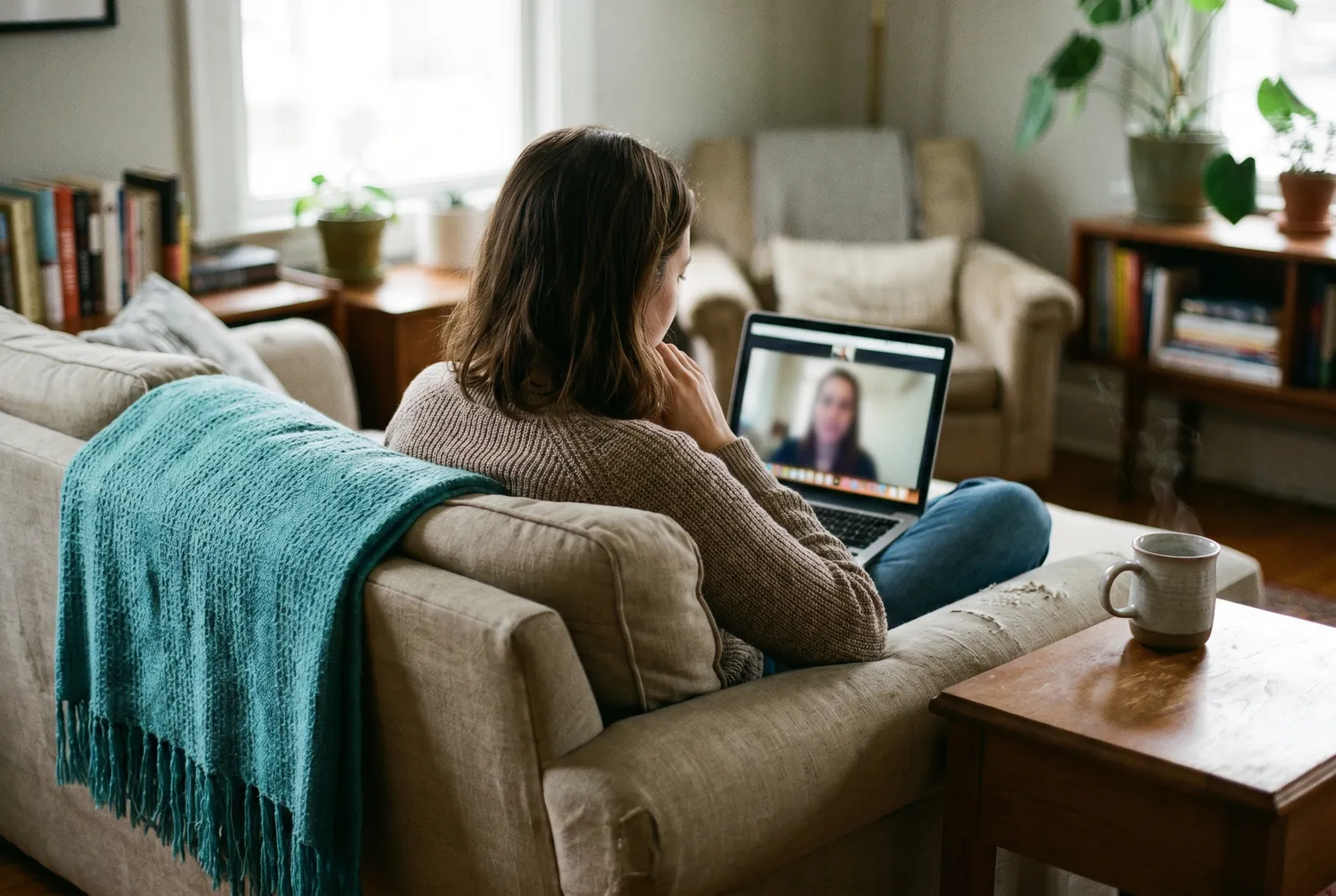
The mechanics of telepsychiatry are simple, a secure video call, but the part that makes it work is less obvious. It's preparation and continuity. I ask people to find a private spot where they won't be overheard, because the quality of what you tell me depends on feeling safe to be honest.
What I've learned is that the technology fades into the background within a few minutes. By the end of a first visit, most people have forgotten they're on a screen. The relationship is what carries the treatment, and that translates through a camera better than skeptics expect.
What telepsychiatry actually means, and what it isn't
In clinical practice, I hear a version of the same question from people scheduling their first appointment: is telepsychiatry real psychiatry, or something closer to online advice? It's an understandable question. The internet is full of mental health content, apps, and chat tools, and it can be hard to tell informal support apart from actual medical care.
Telepsychiatry is psychiatric care delivered through secure video appointments. A virtual psychiatrist conducts the same thorough evaluation an office psychiatrist would: patterns in mood, anxiety, sleep, concentration, stress, and daily functioning, plus medical history, previous treatment, current medications, and life context. The goal is identical. Understand what someone has been experiencing and build a thoughtful plan if support is needed.
It's equally worth naming what telepsychiatry isn't. It isn't text-message advice, anonymous chat support, or an automated tool. Real telepsychiatry runs on secure medical platforms built for confidential health care visits, with a licensed clinician conducting a genuine evaluation. The only thing that changes is where the conversation takes place: a private video connection rather than a clinic office.
Why virtual psychiatric care grew so quickly
Look at how people search for mental health care today and something interesting shows up. Many patients type "online psychiatrist" before they ever look for a local office. That shift didn't happen overnight. The Association of American Medical Colleges has warned for years about a significant gap between the number of psychiatrists available and the number of people seeking care. In some communities, the wait for a local appointment runs weeks or months, and the nearest psychiatrist may be hours away.
Telepsychiatry changes that equation because a clinician can see patients anywhere in a state where they hold a license, which expands access far beyond a single neighborhood. The COVID pandemic accelerated everything: health systems adopted video visits out of necessity, and patients discovered that remote care worked surprisingly well for mental health in particular. Psychiatry is conversation-based. Most of the evaluation involves understanding symptoms, patterns, and life context rather than performing a physical examination, which makes the specialty unusually well suited to video.
Convenience did the rest. People seeking care are often working full time, raising children, or managing other responsibilities that make leaving the house mid-day genuinely difficult. Attending a visit from home or a quiet office, with no commute, no parking, and no waiting room, makes psychiatric care easier to fit into an ordinary week.
On screen: how the first conversation unfolds
People often imagine a virtual visit must be very different from an office appointment. The structure is surprisingly similar. In my own practice, I usually open with something simple: "What has been going on lately?" That open question lets people describe concerns in their own words, whether they arrive with a specific worry or just a sense that something has been off.
From there the conversation explores the symptoms that have been bothering them, patterns in mood, anxiety or panic, sleep quality and fatigue, concentration, and how work, school, or home life has been affected. Many patients are surprised that it feels more like a conversation than an interview. The goal isn't to rush through a checklist. It's to understand the overall picture. A full psychiatric evaluation at shrinkMD runs 45 to 60 minutes, and your first appointment describes the experience in detail.
Once current symptoms are clearer, the discussion widens into background: prior treatment or therapy, past psychiatric medications and how they worked, medical conditions that influence mood or sleep, and family history. This part often surfaces patterns that weren't obvious at first. People sometimes realize mid-conversation that similar symptoms appeared at earlier points in their life.
Treatment planning is a conversation, not a script
Toward the end of the visit, the focus shifts to next steps, and treatment planning doesn't always mean medication. Many appointments center on understanding the problem first and then weighing options together: whether therapy could help, strategies for sleep or stress patterns, medication when appropriate, and follow-up visits to monitor how things go.
The operative word is together. The psychiatrist and patient decide what approach makes sense for the individual situation, which is collaborative decision making rather than a prescription handed across a desk. Follow-up visits, which run 15 to 30 minutes at shrinkMD, continue that conversation and adjust the plan as symptoms change. Our medication management page explains how ongoing prescribing visits are structured.
Behind the scenes: the technology that carries the visit
People sometimes assume telepsychiatry works like a casual video call. It doesn't. The visit runs through encrypted medical software rather than a public video service, with controlled access so only the patient and clinician can enter the session. In the United States, these platforms must meet federal privacy rules, commonly referred to as HIPAA, which set strict requirements for how medical information is stored, transmitted, and accessed.
Around the video itself sits a quieter layer of infrastructure. Most telepsychiatry services include a secure patient portal, a private account where you complete intake forms before the first visit, review appointment details, message the clinic securely, and access visit summaries. The portal keeps communication inside the protected health system rather than scattered across email and phone calls. If you want the step-by-step booking process, how it works covers it from scheduling through follow-up.
The last piece of the privacy picture is the room you sit in. Clinicians conduct visits from private clinical spaces, and patients are encouraged to join from somewhere quiet where nobody can overhear. When both sides hold up their end, a telepsychiatry visit carries the same expectation of confidentiality as a closed office door.
Does it work as well as sitting in the same room?
It's a reasonable concern. When people picture medical care, they picture a physical office. But the American Psychiatric Association and other medical organizations have reviewed multiple studies comparing virtual psychiatric care with traditional visits, and across many of those studies, outcomes for common conditions such as anxiety and depression look very similar whether treatment happens through video or in person.
The reason traces back to the nature of the work. Psychiatric evaluation happens through conversation. Clinicians listen for patterns in mood, anxiety, sleep, thinking, and daily functioning, and those conversations carry well over secure video. In my practice, I notice that some patients actually open up more during video visits. Being in a familiar environment makes personal topics easier to raise, especially at an initial evaluation.
Telepsychiatry isn't the answer to every situation. Some people prefer face-to-face interaction, and some clinical presentations call for in-person evaluation or emergency care; in a crisis, the right step is 988 or 911, not a scheduled appointment of any kind. For most outpatient care, though, quality depends far more on the conversation, the plan, and the ongoing relationship than on the location of the visit.
What can be treated, and what about prescriptions?
Many of the concerns people bring to a traditional psychiatry office are the same ones addressed on video. Anxiety disorders, where worry becomes constant or physical tension builds. Depression, with low mood, fatigue, and loss of interest. Panic symptoms, those sudden episodes of racing heart and shortness of breath that feel so alarming. Insomnia and other sleep problems. Mood swings, irritability, and changes in motivation that suggest a pattern worth evaluating.
Prescribing follows the same logic as everything else in telepsychiatry: evaluation first, decisions second. When medication becomes part of the plan, the prescription goes electronically to your local pharmacy. Two layers of regulation shape this. The psychiatrist must be licensed in the state where you're physically located during the visit, and federal rules add stricter requirements for certain medication classes.
shrinkMD keeps its own policy simpler than the regulations require: we prescribe non-controlled medications only, with no stimulants and no benzodiazepines, in any state, for any patient. Most medications used for anxiety, depression, and sleep are non-controlled, and every prescription we write is sent to the pharmacy the day it's written. The medications page lists what we do and don't prescribe.
Who benefits most, and what the visit actually feels like
One pattern becomes clear quickly in this work. The people who gain the most from telepsychiatry aren't looking for something experimental. They're trying to make care fit their lives: professionals who can't lose half a day to a commute, parents who would otherwise need childcare just to attend an appointment, people in rural areas hours from the nearest specialist, patients with mobility or chronic health challenges, and people who simply talk more freely from home than from a waiting room.
Before a first virtual visit, many people picture something stiff or technical. Then the conversation starts, and within a few minutes the technology fades into the background. No medical building to find, no front desk, no bright lights. You join a private video call from a comfortable space and begin talking about mood, sleep, stress, and what has changed.
Here's the part worth saying plainly. Some people spend months deciding whether telepsychiatry is the right way to receive care, and during those months the anxiety stays constant, the sleep stays disrupted, and the low mood keeps leaking into daily life. The format matters far less than starting the conversation. Begin with whatever you can actually access, and adjust later. If that's virtual care, shrinkMD is pre-launch and taking waitlist sign-ups for adults 18 and older; the contact page is the place to start.
Key takeaways
Five things to remember
- Telepsychiatry is a full psychiatric evaluation by a licensed clinician over encrypted video, not an app, chat service, or automated tool.
- The on-screen visit mirrors an office appointment: open conversation about symptoms, history, and daily functioning, then collaborative treatment planning.
- Behind the scenes, HIPAA-grade encryption, controlled session access, and secure patient portals keep the visit as confidential as a closed office.
- American Psychiatric Association reviews report comparable outcomes between video and in-person care for common conditions such as anxiety and depression.
- Prescriptions can be sent electronically after evaluation; shrinkMD writes non-controlled medications only and sends them the day they're written.
Go deeper across The Shrink Network
You are here: shrinkMD, the clinical care layer of The Shrink Network.
Each site in the network has one job. No matter where you enter, we help you find the next step that makes sense.
Want to understand more first?
These sites and shrinkMD are part of The Shrink Network, founded by Shariq Refai, MD.
Keep exploring
Keep reading, or take the next step
Frequently asked questions
Good questions, clear answers
What's telepsychiatry?
Psychiatric care delivered through secure video visits. A licensed psychiatrist conducts a full evaluation, discusses symptoms, and develops treatment options exactly as they'd in a traditional office, just over a private video connection.
How's telepsychiatry different from online therapy?
Telepsychiatry is medical care from a psychiatrist, including evaluation, diagnosis, and medication management when appropriate. Online therapy provides counseling and emotional support without medical diagnosis or prescribing.
Is telepsychiatry effective?
For many common conditions it is. Studies reviewed by the American Psychiatric Association show outcomes for anxiety and depression that are often comparable between virtual and in-person care. Consistent, thoughtful treatment matters more than the room.
Can a psychiatrist prescribe medication through telepsychiatry?
Yes, after a proper evaluation, with prescriptions sent electronically to your pharmacy. shrinkMD prescribes non-controlled medications only, with no stimulants or benzodiazepines, and sends every prescription the day it's written.
Is the video visit private and secure?
Yes. Telepsychiatry runs on encrypted medical platforms that meet HIPAA privacy requirements, with controlled access to each session. Joining from a quiet private space keeps your side of the conversation confidential too.
What does a first telepsychiatry appointment feel like?
Like a focused conversation. The psychiatrist asks what has been going on, listens, and explores mood, sleep, anxiety, and daily life. Most patients stop noticing the screen within minutes. shrinkMD evaluations run 45 to 60 minutes.
What conditions can telepsychiatry treat?
Anxiety disorders, depression, panic symptoms, insomnia, stress-related concerns, and mood changes are all commonly evaluated and treated by video, because psychiatric assessment rests on conversation and pattern recognition rather than physical examination.
Can I switch from telepsychiatry to in-person care later?
In most situations, yes. Many people start with virtual visits because they're easier to schedule and move to office-based care later if they prefer it. Care can adapt as long as the clinician is licensed where you're located.
How this page is reviewed and how to cite it
EducationalVerify independently: ORCID · Wikidata · NPI Registry · All shrinkMD credentials
shrinkMD. (2026). How Telepsychiatry Actually Works [Web page, medically reviewed by Shariq Refai, MD, MBA]. https://shrinkmd.com/how-telepsychiatry-worksAbout the author
Shariq Refai, MD, MBA, FAPA
I'm a board certified psychiatrist and the founder of shrinkMD, a telepsychiatry platform built around access, continuity, and clinical rigor. My work focuses on helping people understand their mental health clearly and thoughtfully, without rushing to conclusions or shortcuts. I have clinical experience across a range of settings, including work with high-performing individuals and professional athletes, and I remain committed to care that's careful, individualized, and grounded in sound clinical judgment. shrinkMD provides psychiatric care across multiple licensed states in the US, with an emphasis on responsible telepsychiatry and long-term continuity.
Questions like these deserve a real evaluation
shrinkMD isn't seeing patients yet and hasn't set an opening date. Join the waitlist and we'll email you when booking opens in your state.
Join Our Waiting List