Anxiety · 11 min read
How to Stop Anxiety: What Actually Works (and What Quietly Makes It Worse)
Most people try to stop anxiety by calming themselves down, and most find it keeps coming back. Calming treats the moment while the pattern underneath stays intact. The approaches that actually change anxiety, cognitive behavioral therapy, exposure, behavioral activation, and nervous system regulation, work differently. They retrain how your brain responds to perceived threat, which is what produces lasting improvement.
Medically reviewed by Shariq Refai, MD, MBA, FAPA, board certified psychiatrist · Last reviewed September 23, 2026 · Updated October 7, 2026 · Editorial policy

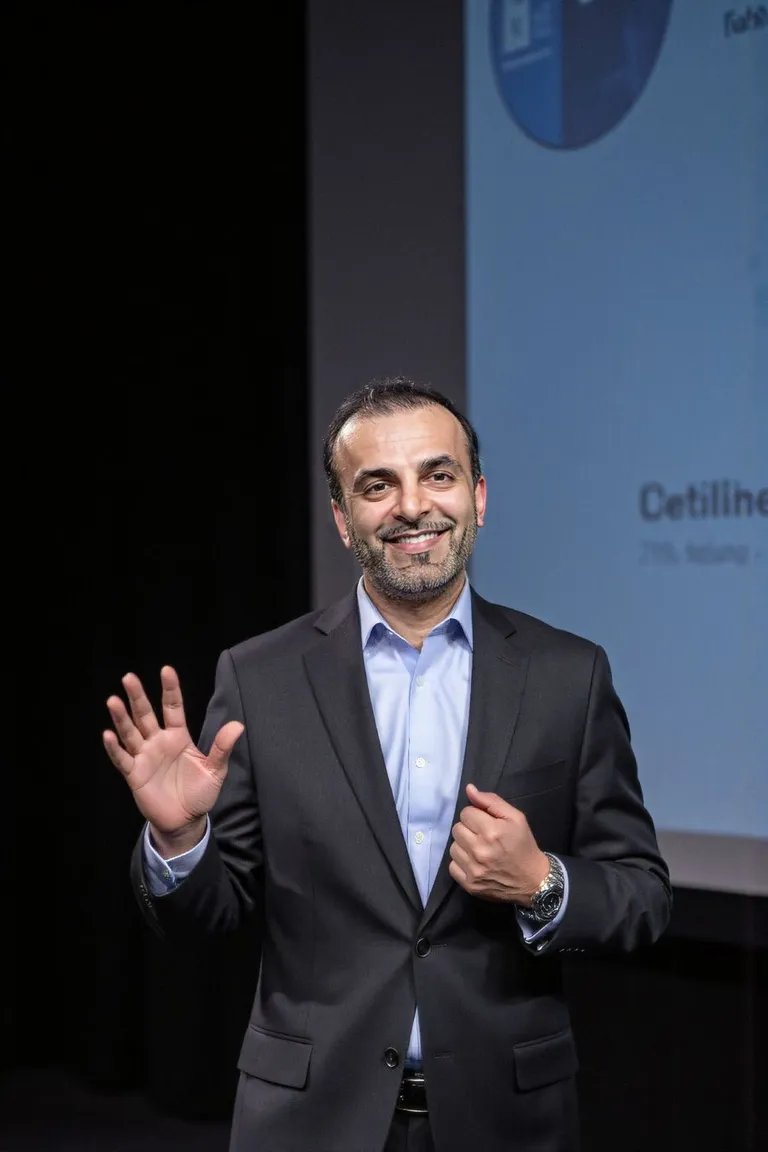
From my practice · Shariq Refai, MD, MBA, FAPA
Why fighting anxiety keeps it alive
The instinct with anxiety is to fight it or flee it, and both feed it. The single most useful shift I help people make is counterintuitive: stop trying to make the anxiety go away, and stop arranging your life to avoid it. Avoidance is what teaches the brain that the fear was justified.
What actually works is slower and braver. Learning to let the feeling rise and fall without obeying it, and gradually re-entering the situations you've been dodging. I won't pretend that's easy, but in my experience it's the path that holds, where reassurance and avoidance only buy a few hours.
Calming down isn't the same as changing the pattern
Most people try to stop anxiety by calming themselves down. That isn't what actually changes it. Calming techniques can lower intensity in the moment, but they don't teach your brain that the situation is safe or manageable. If the underlying pattern stays the same, the anxiety comes back.
The real shift is this: anxiety is a learned response. Your brain has practiced producing it, thousands of repetitions deep. And what's learned can be unlearned. Your brain is constantly trying to predict and prevent potential threat. When a situation feels uncertain, it fires a protective response, and if that response reduces discomfort even briefly, the brain registers that it worked and reaches for it again. Repetition then strengthens the circuit. Research on stress systems shows that repeated activation lowers the threshold for the next response, so it takes less and less to set it off.
That's why anxiety can feel automatic, and why it rarely just goes away on its own. It also explains why so many sensible sounding strategies fail. Avoiding what makes you uncomfortable, thinking your way out of uncertainty, and monitoring your symptoms all make sense in the moment, and all of them reinforce the cycle. This article walks through what actually works, what makes things worse, and how to tell the difference. One honest note before we start: the goal of treatment is management and lasting improvement, not a cure. Nobody can promise you a life with zero anxiety, and nobody should.
Why anxiety keeps coming back
Avoidance is the engine. If something makes you anxious and you avoid it, the discomfort drops immediately. That relief feels like progress. Your brain reads it differently: this situation was a threat, and avoiding it helped. So the next response comes in stronger, and the list of things worth avoiding quietly grows.
Control attempts run a close second. You try to calm down, stop the thoughts, and track every symptom. That keeps your attention locked on the anxiety, and attention is interpreted by the brain as evidence of importance. The feeling stays active precisely because you're working so hard on it.
This is the short term versus long term trap. Avoidance, reassurance, and distraction all reduce discomfort today. They also prevent your system from learning that the situation is manageable, so the pattern survives intact. When patients tell me they've tried everything, what they've usually tried is every variation of temporary relief. The more useful question isn't how do I get rid of this feeling right now. It's what's reinforcing this pattern, and the rest of this article answers it.
Where to start, based on your pattern
You don't need to do everything at once. You need to start where your pattern is most active. If you're mostly stuck in thought loops, start with the CBT based strategies below. If you're avoiding situations or decisions, exposure and behavioral activation matter most. If you feel physically tense or on edge most of the day, begin with nervous system regulation. If you feel stuck across all of these areas, a structured combination through professional treatment works best.
If you want a self directed place to begin, our free Anxiety Reset guide walks through these same methods in a practical, step by step format you can start today.
Cognitive behavioral therapy: changing how you respond to thoughts
Cognitive behavioral therapy is one of the most studied and consistently effective treatments for anxiety. It's also one of the most misunderstood. People hear cognitive and assume it means replacing negative thoughts with positive ones. It doesn't. CBT targets the thinking patterns that keep your brain oriented toward threat: overestimating the odds that something goes wrong, assuming bad outcomes on thin evidence, underestimating your ability to cope.
Those patterns matter because thoughts drive the rest of the system. If your mind tags a situation as risky, your body activates, vigilance rises, and attention narrows onto potential problems, which generates more anxious thinking. CBT interrupts that loop by teaching you to evaluate a thought before accepting it. How realistic is it? What's the evidence? What am I assuming? That process creates distance, and distance reduces how much the thought drives your physiology.
A core piece of this work is tolerance of uncertainty. Many anxious thoughts have no clear answer, and trying to solve them is exactly what keeps the system engaged. CBT teaches you to function without complete certainty rather than to chase it. It won't prevent anxious thoughts from occurring. It reduces how much they control you, which is the part that matters. Structured therapy with a trained clinician is the most reliable way to learn it.
Exposure: the treatment people avoid most
If one intervention consistently changes anxiety over time, it's exposure. It's also the one people avoid the most, and that's no coincidence. Everything about exposure contradicts what anxiety tells you to do. Anxiety says get out, avoid this, make the feeling stop. Exposure says stay, allow the feeling, and let it change on its own.
The method is structured, not reckless. You start with situations that are uncomfortable but manageable, engage with them deliberately, and stay long enough for the activation to fall on its own. That experience hands your brain new data: this situation is survivable. You didn't force the anxiety down. Your brain updated its prediction, which is a far more durable change. Then you repeat it, because one exposure is never enough. Each repetition reinforces the new pattern until the response arrives weaker and leaves faster.
The evidence here's strong. Craske and colleagues, whose 2014 work reshaped how clinicians run exposure, showed that repeated structured exposure reliably reduces fear responses and improves functioning. The mechanism is simple to state and hard to do: avoidance prevents learning, and exposure creates it. If sudden surges of physical panic are the main event for you, this approach is central to treating panic disorder as well.
Behavioral activation: action before motivation
When anxiety shows up, most people do less. They delay decisions, skip situations, and stay inside what feels predictable. That contraction makes sense in the moment and reinforces the problem over time, because a brain that never collects new experiences keeps running on old predictions. Less activity also means fewer wins, less sense of progress, and far more unstructured time to think, which is exactly the soil rumination grows in.
Behavioral activation reverses the sequence. The common assumption is that motivation comes first and action follows. With anxiety, waiting to feel ready is how people stay stuck. So you act first, in small, deliberate, consistent steps: finish the task you've been circling, re-enter an activity you dropped, take one step toward a situation you've been postponing. The goal is movement, not perfection.
Each action despite discomfort teaches your brain three things: you can function while anxious, the outcome is usually manageable, and avoidance was never necessary. Exposure and behavioral activation overlap here. Exposure targets specific feared situations; activation rebuilds engagement with your life as a whole. Together they starve the avoidance cycle from both ends.
Calming the body without chasing calm
Anxiety is something your body does, as much as something you think. When the system activates, heart rate climbs, breathing speeds up and goes shallow, and muscles brace. Working with that physiology directly is worthwhile, as long as you understand what regulation actually means. It doesn't mean forcing yourself to feel calm. It means creating conditions where your system can settle, gradually and with repetition.
Breathing is the most direct lever. Slow, consistent breathing, with the exhale a beat longer than the inhale, signals the nervous system to reduce activation; depth matters less than pace. Muscle work helps too. Tension held in the shoulders, jaw, and neck keeps feeding the brain a signal that something is wrong, and techniques like progressive muscle relaxation interrupt that feedback by alternating deliberate tension with release. Movement rounds it out: an activated body discharges activation through use, and even moderate regular activity lowers the baseline over time.
Here's the trap to avoid. If you deploy these tools only to make anxiety vanish right now, you'll check constantly to see whether they're working, and that monitoring keeps the system lit. The paradox of control is real: the harder you fight the feeling, the more central it becomes. Acceptance doesn't mean liking the anxiety. It means dropping the urgent fight against it while you carry on with what you were doing. Regulation lowers the volume. The learning based approaches above are what change the song.
Lifestyle: what helps, what's overstated, what backfires
Exercise has some of the most consistent evidence of any lifestyle factor. It lowers baseline physiological activation, improves mood regulation, and builds stress tolerance, and consistency beats intensity. Sleep is the foundation under all of it: a sleep deprived brain is a reactive brain, with a lower threshold for threat and less capacity to regulate. If your nights are part of the problem, our insomnia page covers what helps. Social connection belongs on this list too. Humans regulate stress poorly in isolation, and the withdrawal anxiety encourages strips away one of your best buffers.
Diet and supplements deserve honesty. Eating well supports overall health, but the direct effect of specific foods or supplements on anxiety is routinely oversold, and the evidence behind most marketed products is thin or inconsistent. They should never be the primary strategy.
Two substances actively work against you. Alcohol reduces anxiety for an evening, then rebounds it higher and wrecks sleep as it wears off, building a cycle where anxiety grows more frequent. Caffeine in large amounts mimics and amplifies the physical symptoms of anxiety in people already prone to it. Lifestyle changes support the system. They don't replace CBT, exposure, or structured treatment, and expecting them to is a common reason people conclude that nothing works.
The habits that keep anxiety alive
Most of what maintains anxiety looks reasonable from the inside. Avoidance feels like prudence. Reassurance seeking, checking with people, looking things up again, feels like due diligence, but it teaches your brain that safety requires external confirmation, so the next bout of uncertainty demands another dose. Rumination feels like problem solving while it keeps your attention pinned to the problem. Thought suppression backfires directly: the harder you push a thought away, the more often it surfaces. Symptom monitoring, the pulse checks and breath audits, tells your brain the sensation is important, which keeps the system engaged.
All of these share one signature: short term relief, long term reinforcement. That's why they persist, and why recognizing them in your own behavior is genuinely half the work. Breaking the cycle usually means doing the opposite of what feels natural in the moment. Engage instead of avoid. Allow instead of suppress. Act instead of analyze. Sit with uncertainty instead of trying to resolve it. Then repeat, because the brain changes through repetition, not insight.
None of this requires heroics. It requires noticing the moment of choice, the urge to avoid, check, or figure it out, and choosing differently more often than not. Each different choice is a small deposit toward a system that responds with less intensity and recovers faster.
Medication, professional treatment, and when to reach for them
There's a point where self directed strategies stop being enough. Not because you're doing anything wrong, but because the pattern has become established enough to need structure. The signs are consistent: anxiety most days, symptoms that don't settle even when stress is low, temporary relief followed by the same cycle, and growing impact on focus, decisions, sleep, or relationships. If you understand exactly what's happening and still can't exit the loop, that's the signal.
Medication can be a legitimate part of the plan when symptoms are persistent or severe. SSRIs are first line for most anxiety conditions, and options like buspirone and hydroxyzine cover specific situations without habit forming risk. shrinkMD doesn't prescribe benzodiazepines or other controlled substances; the evidence based alternatives work, and they don't trade this month's relief for next year's dependence. Medication doesn't replace the behavioral work. It lowers the floor so the behavioral work becomes doable.
A psychiatric evaluation at shrinkMD takes 45 to 60 minutes with a board certified physician, sorts out which anxiety pattern you're dealing with, and ends with a concrete plan that may include therapy, medication, or both. Visits run by telepsychiatry for adults 18 and older, with flat fees, HSA and FSA acceptance, and superbills if you want to pursue out of network reimbursement. And if you're still in the looking stage, start with the free Anxiety Reset guide. The work described in this article is learnable, and you don't have to learn it alone.
Key takeaways
Five things to remember
- Calming techniques reduce anxiety in the moment; lasting change comes from retraining how your brain responds to perceived threat through repeated new experience.
- Avoidance, reassurance seeking, rumination, suppression, and symptom monitoring all buy short term relief while quietly reinforcing the anxiety cycle long term.
- CBT, exposure, and behavioral activation are the best supported treatments because they create new learning instead of chasing temporary relief.
- Exercise, sleep, and social connection support recovery, but diet and supplement claims are routinely oversold and alcohol reliably makes anxiety worse.
- Anxiety is highly treatable but not curable; the realistic goal is less frequent, less intense anxiety that no longer runs your decisions.
Go deeper across The Shrink Network
You are here: shrinkMD, the clinical care layer of The Shrink Network.
Each site in the network has one job. No matter where you enter, we help you find the next step that makes sense.
Want to understand more first?
- AnxietyResource: How to stop anxiety: what actually works
- AnxietyResearch: CBT for anxiety disorders: the evidence
- shrinQ: The five-minute reset
These sites and shrinkMD are part of The Shrink Network, founded by Shariq Refai, MD.
Keep exploring
Keep reading, or take the next step
Related conditions
Frequently asked questions
Good questions, clear answers
What's the fastest way to calm anxiety?
There's no single method that works every time. In the moment, slowing your breathing with a longer exhale and releasing held muscle tension lower activation fastest. Lasting improvement comes from changing how your brain responds to perceived threat, not from in the moment calming alone.
Can anxiety go away on its own?
Sometimes, especially when it's tied to a specific situation that resolves. Anxiety that's persistent or keeps returning usually doesn't fade on its own, because the pattern maintaining it, often avoidance and rumination, is still being reinforced daily.
What's the best treatment for anxiety?
Cognitive behavioral therapy and exposure based approaches have the strongest evidence, often combined with behavioral activation and body regulation. For persistent or severe symptoms, adding medication such as an SSRI is well supported. The best plan usually combines several of these.
Can anxiety be cured?
No treatment honestly promises a cure, and you should be wary of any that does. Anxiety is highly treatable: most people who do structured work see meaningful drops in frequency, intensity, and interference. Some capacity for anxiety is permanent and useful; it's your threat detection system doing its job.
Does exercise really help anxiety?
Yes, and the effect is among the most consistent of any lifestyle factor. Regular movement lowers baseline physiological activation and improves stress tolerance over time. Consistency matters more than intensity, and it works best alongside structured treatment rather than instead of it.
What makes anxiety worse?
Avoidance, reassurance seeking, rumination, trying to suppress thoughts, and constant symptom monitoring all reinforce the cycle. Alcohol and heavy caffeine make it worse physiologically. Each of these feels helpful in the moment, which is exactly why they persist.
Do I need medication to stop anxiety?
Not necessarily. Many people improve with therapy and behavioral change alone. When symptoms are persistent or severe, medication such as an SSRI, buspirone, or hydroxyzine can lower the intensity enough to make the behavioral work doable. A psychiatric evaluation is how you sort out which path fits.
How long does anxiety treatment take to work?
Skills based therapy like CBT typically shows progress over weeks to a few months of consistent practice, and SSRIs generally take several weeks to reach full effect. Most people notice the early shift as faster recovery after anxiety spikes rather than the absence of spikes.
How this page is reviewed and how to cite it
EducationalVerify independently: ORCID · Wikidata · NPI Registry · All shrinkMD credentials
shrinkMD. (2026). How to Stop Anxiety: What Actually Works [Web page, medically reviewed by Shariq Refai, MD, MBA]. https://shrinkmd.com/how-to-stop-anxietySources
Sources and further reading
About the author
Shariq Refai, MD, MBA, FAPA
I'm a board certified psychiatrist and the founder of shrinkMD, a telepsychiatry platform built around access, continuity, and clinical rigor. My work focuses on helping people understand their mental health clearly and thoughtfully, without rushing to conclusions or shortcuts. I have clinical experience across a range of settings, including work with high-performing individuals and professional athletes, and I remain committed to care that's careful, individualized, and grounded in sound clinical judgment. shrinkMD provides psychiatric care across multiple licensed states in the US, with an emphasis on responsible telepsychiatry and long-term continuity.
Questions like these deserve a real evaluation
shrinkMD is opening first in Maine and Nebraska. Join the waitlist and we'll email you when booking opens in your state.
Join Our Waiting List